Friday, December 23, 2022

UBHub celebrates the adoption of the Kunming-Montreal GBF, highlighting local and urban impacts

Congratulations to the 196 Parties to the Convention on Biological Diversity for the adoption of the Kunming-Montreal Global Biodiversity Framework with a vision statement of “By 2050, biodiversity is valued, conserved, restored and wisely used, maintaining ecosystem services, sustaining a healthy planet and delivering benefits essential for all people.” The agreement includes 4 goals and 23 targets for the parties to implement immediately and to achieve by 2030.

Click here to read the Kunming-Montreal Global biodiversity framework

There are many issues discussed in the agreement that have direct and indirect impacts on decision-making at the local and urban levels. Particular highlights include: 

  • Paragraph 10 on the Whole-of-government and whole-of-society approach: “This is a framework for all - for the whole of government and the whole of society. Its success requires political will and recognition at the highest level of government, and relies on action and cooperation by all levels of government and by all actors of society”
  • In particular, Target 12 is focused on urban areas and it states: “Significantly increase the area and quality and connectivity of, access to, and benefits from green and blue spaces in urban and densely populated areas sustainably, by mainstreaming the conservation and sustainable use of biodiversity, and ensure biodiversity-inclusive urban planning, enhancing native biodiversity, ecological connectivity and integrity, and improving human health and well-being and connection to nature and contributing to inclusive and sustainable urbanization and the provision of ecosystem functions and services.” However, most of the 23 targets have an urban component when the direct and indirect impacts of urban areas are considered. Within the first section on reducing threats to biodiversity, every target has implications for urban areas: Target 1 encourages participatory management of natural areas, Target 2 calls for 30% of degraded areas to be restored, Target 3 calls for the protection of 30% of land and aquatic areas, Target 4 seeks to reduce risks of species extinction, Target 5 ensures sustainable harvest and trade of wild species, Target 6 reduces the impacts of invasive species, Target 7 reduces pollution, and Target 8 explores linkages with climate change. Within the second section on meeting people’s needs through sustainable use and benefit-sharing, target 11 on enhancing ecosystem services and target 12 on urban areas are of particular interest. Within the third and final section on tools and solutions for implementation and mainstreaming, Target 14 on mainstreaming, Target 16 on reducing consumption, Target 21 on information and awareness-raising, and Targets 22 and 23 on equitable and gender-responsive participation and decision-making are particularly relevant.
  • Section K encourages increasing the awareness of biodiversity by all sectors of society

There is also agreement CBD/COP/15/L22 called “engagement with subnational governments, cities, and other local authorities to enhance implementation of the post-2020 global biodiversity frameworkThis document calls for the involvement of local governments in national biodiversity strategies as well as support for local biodiversity strategy development and implementation, including capacity-building assistance and financial resources. It encourages collaboration between governance institutions and private institutions, emphasizes the important role of local governments in raising public awareness, and calls for monitoring and measurement of local biodiversity efforts, particularly through tools such as the Singapore Index for Cities’ Biodiversity.

Lena Chan speaking at the 7th Summit for Subnational Governments & Cities, the COP15, Montreal, 2022.
Look for upcoming analysis by UBHub on how this decision impacts local governments!

Wednesday, December 14, 2022

Urban Biodiversity Hub at COP15, Montreal

The UN Biodiversity Conference COP15 kicked off on 7 December in Montreal (OEWG 5/CBD COP 15/CP-MOP 10/NP-MOP 4), with high expectations about a deal to protect the planet's biological diversity. 

UBHub @ the 2022 UN Biodiversity Conference COP15

The Conference is expected to adopt the post-2020 Global Biodiversity Framework (GBF), which will provide a strategic vision and a global roadmap for the conservation, protection, restoration and sustainable management of biodiversity and ecosystems for the next decade. 

UBHub's Steering Committee, Michael Halder, Jennifer Rae Pierce, Mika Tan, Pablo Arturo López Guijosa

UBHub's Steering Committee members travelled to Montreal to attend several events, including the 7th Summit for Subnational Governments & Cities, the Nature Positive Pavilion, as well as the Fifth Science-Policy Forum for Biodiversity and the Eighth International Conference on Sustainability Science

Jennifer Rae Pierce presenting at the Nature Positive Pavilion


Additionally, we met with several NGOs, city and academia representatives, and members of international organizations to foster cooperation.

UBHub's advisor Dr. José Puppim de Oliveira 

Our team formed in December of 2016 at the 13th Conference of the Parties of the Convention on Biological Diversity. We came together out of mutual interest in promoting measurable biodiversity actions in cities around the world. We have since built an international organizational structure that is maintained via regular online meetings and reliance on the latest in remote team management tools. Meeting in Montreal also provided the opportunity for the team to advance our strategic planning and align our goals to the current international negotiations.

UBHub's Steering Committee social gathering and strategic meeting


Tuesday, February 15, 2022

Now is the Time for Greener Cities


 Calling all Cities to Enter the AIPH World Green City Awards Today!


AIPH proudly presents the AIPH World Green City Awards, the flagship initiative of their Green City programme.


AIPH is the world’s champion for the power of plants. The inaugural edition of the AIPH World Green City Awards 2022 recognises city-led initiatives relying on a greater use of plants and nature to create better and greener city environments – helping to fulfil local aspirations for improved economic, social and environmental resilience. With the deadline for submission of entries on 14th March 2022, AIPH invites all cities, large and small, to showcase their “living green” and demonstrate that they are champions for the power of plants. 


Plants are at the core of stabilizing our ecosystems and humanity has only recently begun to understand the multitude of benefits they can provide”- Mr. Pavel Dostal, CEO at GreenVille & Vice President of the EFB


Cities are only a few short steps away from submitting an entry. Registering a city profile starts the simple process and gives you access to the online portal to compile your entry and make your final submission online. A step-by-step guide to entering the AIPH World Green City Awards contains all the information cities need to progress along this exciting journey. There is still time to join the growing number of leading cities that are actively preparing their entries and reap the benefits of this exciting opportunity. Show the world how plants and nature have transformed your city.


“Local and regional governments have a pivotal role to play in developing nature-based solutions and inclusion of plants in an urban environment. The Awards will be the moment to celebrate those success stories from our members around the world”- Ms. Emilia Saiz, Secretary General of United Cities and Local Governments (UCLG)


The AIPH World Green City Awards are designed to celebrate and champion ambitious nature-orientated approaches to city design and operation. The 2022 edition is offered in six categories, with awards presented to the best entry in each category, and with one overall AIPH World Green City winner. Cities can submit multiple entries in more than one category to increase their chances of being chosen as a winner by the esteemed technical panel and jury. There is no cost for cities to register or to enter the Awards, and there are many benefits, which you can read about here.  


AIPH has partnered with leading organisations and city networks to bring the AIPH World Green City Awards to life: the first global cities awards where plants and nature are the core focus. The Urban Biodiversity Hub is thrilled to be a proud partner among this prestigious group. 


“Now is the time to rebuild our relationship with our planet. Cities are a critical part of this process. With more than half of humanity living in cities, and well over half of our consumption driven by urban systems, cities must boldly commit to transforming harmful processes and reconnecting people with nature. We must start in our communities where we live every day, and cities are the right scale to demonstrate meaningful action and lead global transformation.” – Ms. Jennifer Rae Pierce, head of UBHub’s partnership and engagement team.

As a global urban community, we stand together at a critical moment in the history of our planet. As our cities grow exponentially and nature continues to diminish at unprecedented rates, now is our time to take ambitious action and transform our cities into greener, healthier, and more liveable places where both humans and nature thrive in harmony.


The solutions to the complex challenges that our cities face come from nature. There has never been a better time to harness the power of plants. As we stand together, united by a common vision, the AIPH World Green City Awards aims to enable accelerated action by cities, both in 2022, the critical year for nature, and in the coming Decade of Ecosystem Restoration.


The AIPH World Green City Awards are well within reach for all cities that are committed to shaping a greener future. AIPH and partners call on cities from around the world to act now. Don’t miss out on the opportunity to lead the way and inspire a global movement for greener cities. For more information or to enter, click here.


By entering the AIPH World Green City Awards, everyone wins- Cities, People, and Planet.


Please read the Frequently Asked Questions. The AIPH Green City team is available to assist cities every step of the way. For assistance or support, please contact greencity@aiph.org


Follow AIPH on: Instagram: @aiphglobal; LinkedIn: @AIPH; Facebook: @theAIPHTwitter @AIPHglobal

Friday, February 11, 2022

Urban Nature Index

In January 2021, the IUCN Urban Alliance selected UBHub to develop their new Urban Nature Index (UNI). The UBHub consultancy team, Pablo Arturo Lopez-Guijosa, Jennifer Rae Pierce, Michael Halder and Mika Tan, worked diligently and skillfully over the next few months to deliver this new and comprehensive index for urban nature which has been adopted into IUCN’s major goals for 2030.

The Urban Nature Index is a new digital product for cities to self-assess their ecological impact at the local, regional and global levels using a set of 30 indicators grouped under the six themes of Consumption Drivers, Human Pressures, Habitat Status, Species Status, Nature’s Contributions to People and Governance Responses. By completing their self-assessment through the use of the index, cities will not only better understand their impacts on nature but will help them set science-based targets to improve upon those indicators where they may be lacking and to continually monitor their progress accordingly. By doing so, the UNI will serve to enhance environmental transparency and accountability, facilitate goal setting and catalyze action. The index is intended to complement the Singapore Index on Cities’ Biodiversity and the work Science-based Target Network among others.

To develop the UNI, the UBHub consulting team undertook a literature review, deployed a broad consultation survey with cities around the world, and conducted pilot testing sessions with the cities of Saanich (Canada), Mexico City (Mexico), Curridabat (Costa Rica), Paris (France), Lagos (Nigeria), and Singapore.

At the September 2021 IUCN World Conservation Congress in Marseille, France, the UBHub team unveiled the UNI to an audience of delegates attending both in-person and virtually. At the conclusion of the WCC, the IUCN released the Marseille Manifesto which, among other action items, included a commitment by IUCN Members and partners to “... expand universal access to high-quality green spaces and to enhance urban biodiversity in 100 cities, representing around 100 million citizens by 2025, and assessing their impact according to the IUCN Urban Nature Index.” 

Moreover, in her Statement for World Cities Day in 2021, Ms Elizabeth Mrema, Executive Secretary of the Convention of Biological Diversity acknowledged the Urban Nature Index: “We need effective metrics of impacts and dependencies such as […] the IUCN Urban Nature Index.” This is recognition of the quality of work of our team and we look forward to helping IUCN achieve this goal. 


To know more about the Urban Nature Index, please visit the link below.

The IUCN Urban Nature Index, A tool for measuring the ecological performance of cities (Updated: 9 February 2022)

Friday, December 10, 2021

AIPH and Urban Biodiversity Hub (UBHub) Formalise Partnership for the AIPH World Green City Awards


The International Association of Horticultural Producers (AIPH) and the Urban Biodiversity Hub (UBHub) are proud to announce the signing of a statement of collaboration to formalise their partnership for the AIPH World Green City Awards and beyond.

The partnership between AIPH and UBHub aligns the common goals of these organisations in pursuit of co-promoting the benefits of urban actions for plants, nature, and biodiversity by local governments. Through the partnership, UBHub joins the growing network of supporting partners for the AIPH World Green City Awards. In turn, the initiatives that are submitted as entries for the AIPH World Green City Awards will be showcased on the UBHub web tool and online platform.

Ms. Mika Tan, Head of UBHub’s Steering Committee, had this to say in support of the partnership: “The AIPH World Green City Awards is a unique opportunity to recognize cities’ efforts in linking urban vegetation, food systems, and biodiversity for healing humanity’s relationship with nature, and to promote healthier, more sustainable, and liveable cities. The right to a clean, healthy and sustainable environment is a human right, and on the occasion of International Human Rights Day, UBHub is proud to announce our partnership with AIPH to support the inaugural edition of the Awards.”

Urban Biodiversity Hub Logo

Nature is the foundation on which our very existence depends, yet it is diminishing at alarming and unprecedented rates. The protection, conservation, and restoration of biodiversity, particularly in and around cities, is essential to ensuring that we safeguard the natural ecosystems which provide multiple benefits for urban populations. The critical role of local governments in achieving the global biodiversity agenda is increasingly recognised as cities are taking bold action to reverse the current trajectory. Now, more than ever before, it is critical that we come together to celebrate and showcase best practice and thereby inspire accelerated urban action for plants, nature, and biodiversity.

“The work of UBHub is well aligned with AIPH’s vision of celebrating the work of cities for plants, nature, and biodiversity. We are proud to be collaborating with the UBHub team,”- Mr. Tim Briercliffe, Secretary General, AIPH

AIPH, the world’s champion for the power of plants, supports the work of their grower associations globally and together they champion a prosperous industry, growing plants that enhance lives, advance societies, and sustain our planet for this generation and the next. AIPH strives to reignite and uphold an appreciation of plants that we believe is a basic human instinct. AIPH also leads global thinking on the successful integration of nature into the built environment. The AIPH Green City programme promotes awareness of the urgent need for urban greening. It is through this programme that AIPH advocates for the essential role of plants in creating vibrant urban areas and aims to develop an international standard for green cities as well as be a focal point for green city best practice and a source of expertise.

The Urban Biodiversity Hub (UBHub) helps cities around the world to measure and promote their biodiversity and assess their biodiversity strategy. UBHub works with municipal and other local governments and their partners to improve the efficiency and effectiveness of their biodiversity planning, according to the goals they set for themselves. This is done by consolidating information on urban biodiversity planning activities and guides in one website, and through their forum and other resources pages which provide access to the latest practices for urban biodiversity planning. UBHub’s immediate goal is to create a web tool for local governments (cities) to measure their biodiversity and assess their biodiversity strategy. In the long term, UBHub seeks to promote biodiversity awareness and action within and around cities.

“Many of the actions taken by local governments to harness the power of plants and associated ecosystem services also make significant contributions to conserving, protecting, and restoring urban biodiversity. We are thrilled to welcome UBHub as a supporting partner for the AIPH World Green City Awards and look forward to jointly promoting leading initiatives with the potential to inspire cities around the world to embrace nature-based solutions to our complex urban challenges.”- Dr. Audrey Timm, Technical Advisor, AIPH Green City Programme.

AIPH and UBHub warmly invite all cities, large and small, to further demonstrate their ambitious actions and showcase their work on urban greening and biodiversity by entering the AIPH World Green City Awards.

“Now is the time to rebuild our relationship with our planet. Cities are a critical part of this process. With more than half of humanity living in cities, and well over half of our consumption driven by urban systems, cities must boldly commit to transform harmful processes and reconnect people with nature. We must start in our communities where we live every day, and cities are the right scale to demonstrate meaningful action and lead global transformation.” – Mx Jennifer Rae Pierce, head of UBHub’s partnership and engagement team.

Both AIPH and UBHub are united in our aspiration to accelerate local action in support of safeguarding our collective urban future. We jointly acknowledge that by standing together, we have the greatest chance of maximizing our impact.


Thursday, October 28, 2021

World Green City Awards 2022

AIPH, the International Association of Horticultural Producers and the world’s champion for the power of plants proudly presents the AIPH World Green City Awards, which recently opened for entries for the 2022 inaugural edition.


The leading role of city authorities is recognised for promoting and supporting the greater inclusion of plants and nature in urban environments. The AIPH World Green City Awards 2022 are designed to champion ambitious nature-orientated approaches to city design and operation. Specifically, they seek to recognise public initiatives relying on a greater use of plants and nature to create better city environments – helping to fulfil local aspirations for improved economic, social and environmental resilience. 


The awards celebrate innovation, achievement, and commitment to the globally recognised imperative to embrace nature-based solutions that harvest the power of plants and associated ecosystems services to help address the major challenges facing cities today – or tomorrow. AIPH initiated these awards to bring wide recognition to the value of plants in providing solutions for common city problems and to create an enabling environment to shape and nurture a strategic shift in city governance and planning. 


The AIPH World Green City Awards are unique in that they are the first global awards where plants and nature are the core focus. The 2022 edition of the AIPH World Green City Awards will be offered in six categories, with a final selection made from a shortlist of the best three in each category, and presenting three category winners, and one overall AIPH World Green City winner. 


The online portal is now open to receive entries by cities right up to the submission deadline of 14th March 2022.


There are many benefits in entering the AIPH World Green City Awards. It is the first international competition that cities enter to:

  • Gain recognition for the greening they have done and the benefits of this.
  • Promote their city at an international level.
  • Inspire a global movement for greener cities.
  • Demonstrate that their city is highly desirable to live and work in.
  • Showcase how nature can improve the health of citizens, increase job opportunities, and stimulate economic development and stronger greening regulations.
  • Demonstrate how ambitious local actions contribute to achieving global agendas
By entering, cities stand a chance to:
  • Have their initiatives featured on the AIPH website and integrated into the case study library associated with the AIPH Green City Guidelines. All shortlisted entries will be featured.
  • Win an award certificate and a trophy. Winners can nominate key partners and key staff so that additional award certificates can be prepared in their name.
  • Gain global recognition and profiling opportunities as winners will be promoted via AIPH and the World Green City Awards partners’ and sponsors’ media channels.
  • Have their city’s work displayed to a significant global audience in the AIPH pavilion of an International Horticultural Expo.
  • Receive up to 4 complimentary tickets to the gala event of the Awards ceremony for winners.


Through the AIPH World Green City Awards, AIPH aims to ignite a global movement of cities that are demonstrating the principles of “Living Green” in action and inspiring other cities to raise their ambition through the development of a rich case study library that celebrates best practices.


Don’t miss this opportunity to demonstrate your city’s commitment to “living green” and showcase your ambitious nature-based solutions.


Enter the AIPH World Green City Awards today! 


For any queries, questions, feedback, or to get in touch with the AIPH team, mail timothy.blatch@aiph.org


To stay in the loop, follow AIPH on: LinkedIn @AIPH; Facebook: @theAIPH; Twitter @AIPHglobal


Watch the video below for an introduction to the awards (available with subtitles in 9 languages)!


Friday, October 30, 2020

2020 UBHub Update: Trends in Municipal Urban Biodiversity Efforts

By Audrey Hsi

Edited by Mika Mei Jia Tan, Pablo Arturo López-Guijosa, Jennifer Rae Pierce

August 7, 2020

Introduction to UBHub and its functions

Since its launch in 2018, the team at the Urban Biodiversity Hub (UBHub) has been committed to providing free, up-to-date information on urban biodiversity endeavours by cities of various sizes around the world. The ever-growing UBHub database includes biodiversity programs, initiatives and plans and were initially built off research by Pierce (2014). Thanks to a large network of practitioners and internet research, UBHub was able to broaden the database even further and now contains urban biodiversity information from all 7 continents - even the Palmer research station in Antarctica participated in the Cities of Nature Challenge![1] Since the launch of their database in 2018, UBHub has offered open access to its resources to help increase accessibility for individuals and cities to urban biodiversity practices. The compilation of data and programs can be explored on a filterable georeferenced database found on their website, ubhub.org.

A 2020 update has registered over a hundred newly added biodiversity reports, plans and programs to the UBHub database. Data taken from UBHub’s 2018 The Nature of Cities report (TNOC) compared to the new comprehensive data has revealed shifting trends and patterns over the past two years and displays the world's recent and past responses to urban biodiversity measures.

Biodiversity Plan and Reports: From 2018 to 2020

Since 2018, UBHub data has shown an increase in biodiversity documents

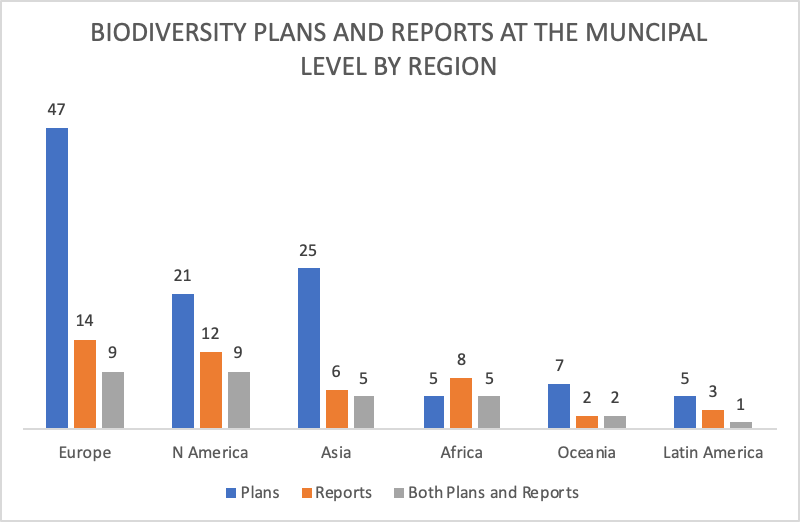
Biodiversity plans and reports are crucial to the coordination and implementation of local urban biodiversity programs and activities. UBHub defines a municipal biodiversity plan as an official local government document that outlines goals for biodiversity and strategies or actions to attain these goals. Municipal biodiversity reports are defined by UBHub as an ecosystem health and/or biodiversity assessment published by the local government and that may be condensed for the public. UBHub continuously updates the database, and in the last year, has made particular efforts to update the number of municipal biodiversity plans in particular.  As of 2020, UBHub’s database lists 189 municipalities in 6 continents that have released biodiversity plans and/or biodiversity reports.

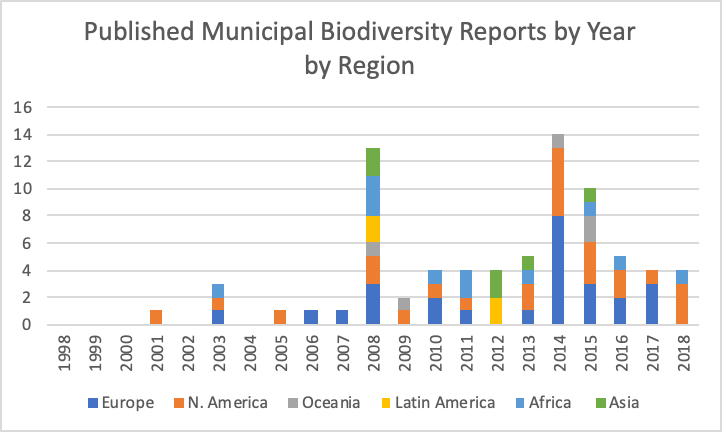
Updated graph of the number of municipalities that have published biodiversity reports/plans (by region). A total of 117 cities have published biodiversity plans; 45 have published biodiversity reports. Of these, 31 have published both. European cities are the biggest contributor to these numbers. Data is based on the ubhub.org/map. 


UBHub’s 2018 update published in the Nature in the Urban Century Assessment (McDonald et al. 2018), reported at least 123 municipalities in 31 countries published biodiversity plans and/or reports. In this 2020 update, there has been a 2% increase in municipalities that have published biodiversity plans and/or reports, resulting in a total of 125 municipalities. The following cities issued biodiversity plans in the update: Oslo(Norway), London (England), Pimpri Chinchwad (India),  and Tel Aviv (Israel). As for biodiversity reports, the city of Kawasaki (Japan) was the only city to have published a biodiversity report since 2018 based on UBHub’s current data though it should be noted that while UBHub made specific efforts to update biodiversity plans, reports did not receive the same attention. As a result, newly published biodiversity reports may have been missed in the count.

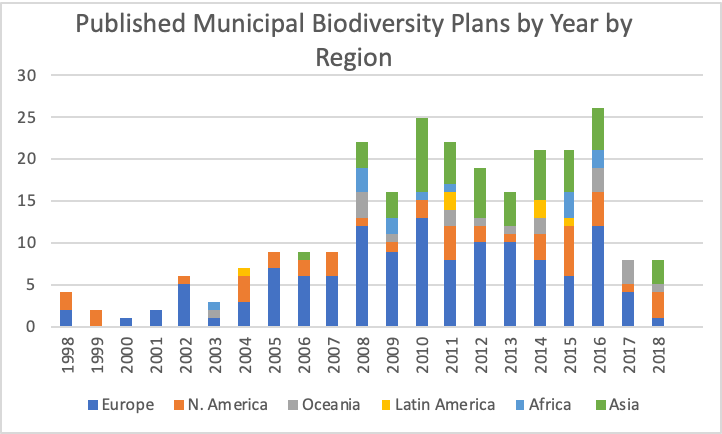
Graphs of the number of biodiversity plans, reports and plans/reports published by municipalities around the world per year by region over the past 20 years. The total number of plans/ reports in the UBHub database are 263 and 76 respectively. The total number of published biodiversity documents in the last 20 years is 256 for plans and 77 for reports. UBHub data on biodiversity documents goes back to 1992, which are not accounted for in the graph. The year of publication is missing on some biodiversity documents in the database as well, which also contributes to the lower number in total biodiversity plans and reports published on the graph. The peak of published documents occurred in 2008 and 2014 or 2016. After 2014, there has been a decline in published biodiversity reports. Note that North America is defined according to the World Bank regions, and as such, includes only Canada, the USA and Bermuda, whereas Latin America encompasses the rest of the Americas and the Caribbean.


The annual number of municipal biodiversity document publications has declined since 2016

        In terms of the trends for published biodiversity documents over a 20 year period from 1998 to 2018, the pattern is relatively similar. For the municipal biodiversity documents, there are definite peak years for publication. The first peak occurred in 2008 when there were 22 published plans and 13 published reports. This spike may be partly attributed to ICLEI’s 2006 Local Action for Biodiversity (LAB) Pioneer pilot program which had 19 municipal participants and included the publication of each type of document in its stepwise framework. In 2009, 300 local governments attended the ICLEI General Assembly where the LAB pilot program was announced (CBD 2012) and this may have raised the profile of these types of documents for years to come. Several other programs debuted during this time, including the Singapore Index in 2010, and there was a particular focus on biodiversity internationally with the UN announcement of the year of Biodiversity in 2010 and the Decade for Biodiversity in 2011. The next peaks were staggered, with 14 biodiversity reports published in 2014 and 26 biodiversity plans in 2016. 

While the publication of biodiversity reports started to decline after peaking in 2014,the publication of biodiversity plans did not decline until the last two years. There are a myriad of potential reasons for these recent declines. One may be the Eurozone recession of 2014, which resulted in budget cuts (Weisbrot 2014). Since cities in the Eurozone contribute to 40% of identified local biodiversity plans and reports, it is possible that this recession contributed to the reduced number of these publications. Another may be that ICLEI has shifted its focus from the LAB program to other types of programs that are less focused on the publication of biodiversity reports and plans in favor of other approaches.

Future outlook for biodiversity documents

This combination of factors could have resulted in the dwindling in biodiversity documents over the past years. Unfortunately, the recent COVID-19 pandemic has disrupted all federal and local governmental plans around the world and will most likely have a negative impact on the publication of biodiversity documents for the immediate years to come.

Preventing unnecessary human and wildlife that could potentially carry zoonotic diseases/viruses is an important lesson learned from the COVID-19 pandemic. Biodiversity plans and reports can help minimize the interaction between large amounts of wildlife and large populations. Biodiversity plans can help to streamline the process of conserving the already existing biodiversity in the area and biodiversity reports can help cities maintain a healthy and diverse ecosystem.

Biodiversity frameworks and programs: From 2018 to 2020

Biodiversity frameworks and programs function as a tool for measurements and resources for urban biodiversity in municipalities

        The UBHub database also compiles municipal participants of biodiversity programs and frameworks. There are 31 different types of programs and frameworks that are featured on the UBHub database. Biodiversity programs assist their municipal members by offering support and systemized plans for the municipality to follow. Sometimes, programs will charge a fee in exchange for these membership benefits. Another part of being a municipal member of a biodiversity program include publishing biodiversity documents, starting pilot programs, making political commitments or joining specific networks that include other members. ICLEI programs and alliances that are featured in the database include the Local Action for Biodiversity (LAB); LAB Communication, Education and Public Awareness Program (CEPA); LAB Wetland Program; and the INTERACT-Bio program. Other non-ICLEI biodiversity programs include the Cities with Nature program that started in 2018 and recorded 125 new participants in this recent UBHub update. The primary function of biodiversity frameworks is to provide a standardized method for biodiversity measurements and indices. Frameworks such as the Singapore index and the Ecological Footprint consolidate several numeric indicators into a single number, creating a biodiversity ‘score’ or index, indicative of the municipality’s overall biodiversity condition and planning efforts. New frameworks that were recently created in 2018 include the Urban Sustainability Framework (USF), which was created by the Global Environment Facility (GEF) and the Circle of Sustainability. These indices measure biodiversity, which then acts as a part of a larger, overarching sustainability tool for municipalities to use.


Updated graph of municipal participants (by continent) of a few international biodiversity programs and frameworks. Mayors Monarch pledge has the highest number of municipal participants all from North America. Data was gathered from ubhub.org/map.   


In 2018, the program with the highest number of municipal-participants found in the UBHub program and framework database was the Mayors Monarch pledge with over 300 municipalities, all from North America. The newly updated data shows that the Mayors Monarch Pledge has increased its municipal participants by 74 municipalities, and has also retained its spot as the biodiversity program with the highest number of municipal participants in the UBHub database. The Mayors Monarch Pledge was created by the National Wildlife Federation (USA), due to the range of Monarch butterflies, all of the participants are from North America. The program itself awards points for a predetermined list of 24 actions that municipalities take to benefit Monarch butterflies. After an annual report on Monarch butterfly actions from each city, they are awarded either “Monarch Champion” or “leadership circle” based on the number of particular actions taken.

Six biodiversity frameworks and programs have increased the number of participants while the ICLEI CEPA program recorded no new numbers. One of the biggest increases seen since 2018 was in the Ecological Footprint framework and the Cities with Nature program. The Ecological Footprint increased by 50% in the number of different municipal participants and has grown to become one of the biggest frameworks in the UBHub database. As a framework, the Ecological Footprint measures the amount of nature that is needed to sustain humanity or the economy. The large numbers of Asian municipal participants could be accounted for by the 12 different Asian Ecological Footprint reports that published over 100 Asian municipal ecological footprints (Footprint Network 2020). UBHub’s updated data on the Cities with Nature Program reported over 5 times the number of participants since the launch of the UBHub database in 2018. The Cities with Nature works to focus the limelight on the importance of nature within cities. The program also created an international platform for cities and their partners to communicate and engage with each other in order to move towards a more sustainable environment in an urban setting.

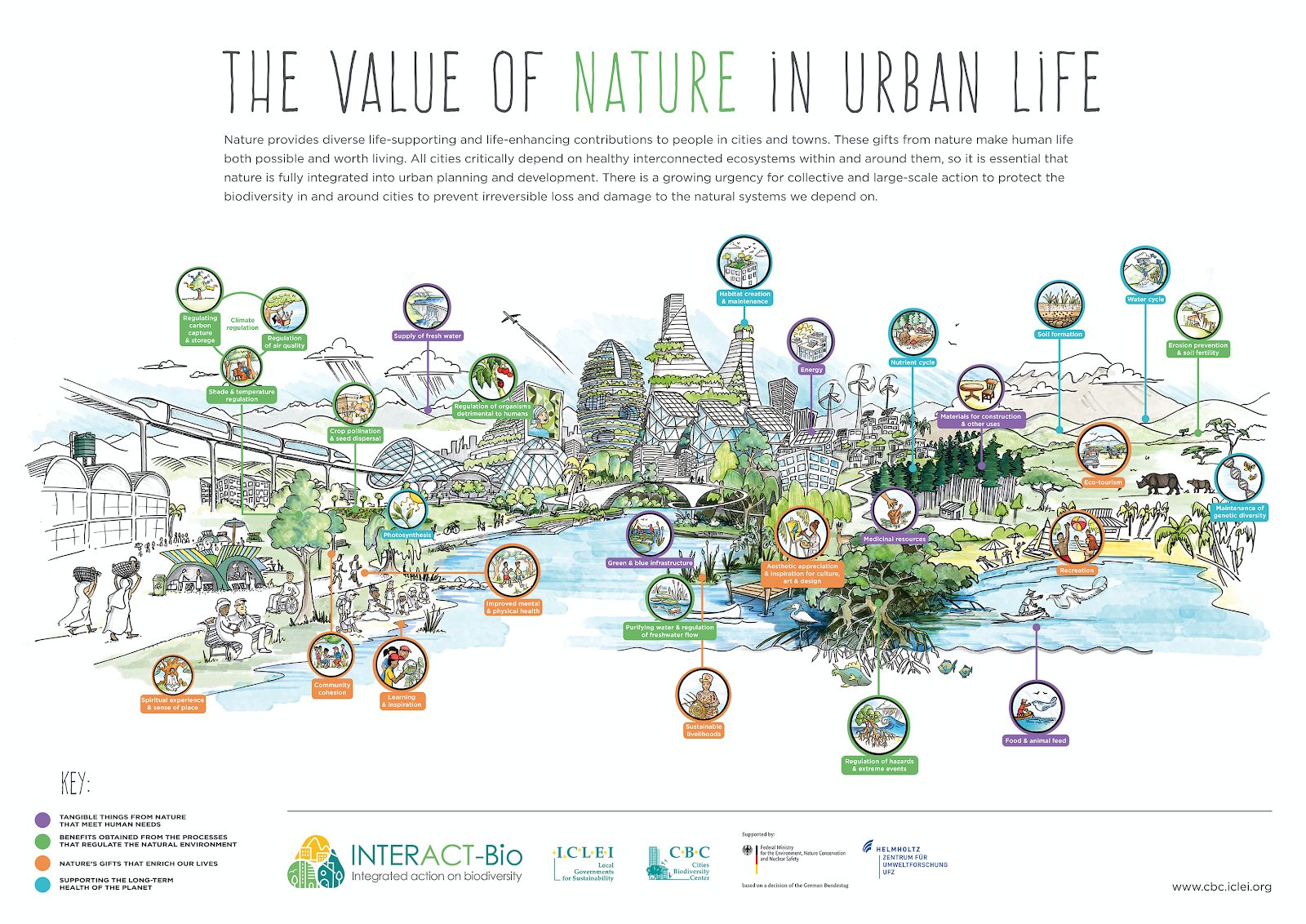
From left to right: Map of urban biodiversity benefits taken from  https://cwn.iclei.org. Global Footprint Network promotes the calculation of Ecological footprints with more information on their website https://www.footprintnetwork.org. Mayor Francis Slay of St. Louis Missouri and the President and CEO of the National Wildlife Federation (NWF) launch the Mayors Monarch Program in 2015.

Increased biodiversity programs and framework numbers could be attributed to more centralized information and data collection

The rapid increase in the number of ecological footprints can be partially attributed to the founding of the Global Footprint Network in 2003. The Global Footprint Network uses data from the UN from 1961 to present day to calculate the ecological footprint for countries all over the world (Footprint network 2020). Reports and studies, such as the previously mentioned Living Planet report, have also contributed to the large increase in city participants in the ecological footprint framework. In total, there are 589 ecological footprints but many municipalities are recurring participants to the framework. For example, Barbados and Singapore alone accounted for a total of 53 Ecological Footprints, with at least two Ecological Footprints for a large handful of other municipalities. The reason for the exponential increase in the number of Cities with Nature participants could be from the fact that the ICLEI founded program just started in 2018 and lacked significant participation as it was just starting out.

Graph of municipal participants in biodiversity program by population size. Majority of the municipal participants of the Mayors Monarch pledge have populations less than 100,000. Other programs, such as the Ecological Footprint, have participants of all different population sizes.

Distribution of municipal participants in biodiversity programs and frameworks vary by size

Certain biodiversity programs and frameworks target specific municipalities who share similar interests to the program mission. Generally, biodiversity programs and frameworks are relatively spread out in terms of municipal participant population size, with most of the participant population concentrated between 1,000,000 to 500,000. Many programs don’t have municipal participants over 5,000,000 except for Ecological Footprints. Similarly, the Mayors Monarch pledge has a significant number of participants on the other side of the scale with the majority of their participant populations less than 100,000.

What is significant about the Mayors Monarch program is that all of their participants are from North America as it is the only home for Monarch butterflies. Based on our findings, it seems that the Mayors Monarch pledge not only consists of North American municipalities but are targeting municipal populations of 200,000 or smaller. A reason for the targeted participants could just be that there are larger monarch populations located by smaller municipalities.  On the opposite end of the spectrum, the Ecological Footprint framework has the most participants with populations over 5,000,000. A possible reason for the large participant population in the framework could be related to the previously aforementioned growth in Asian participants in the ecological footprint. Asian cities are some of the largest and fastest growing cities in the world in terms of population and infrastructure. Chinese municipalities alone account for 50% of the total ecological footprints participants with populations over 5,000,000.

Conclusion

Our team at UBHub has been committed to ensuring that municipal biodiversity programs, documents and framework are recorded and organized for the international community of environmentalists. Since 2018, UBHub has grown its database with data from all continents and over a thousand cities. Despite the apparent growth in the database, much of the increase in data could be due to a rise in easy-to-access urban biodiversity information rather than a spread in recent urban biodiversity advancements. The past two years have marked an end of an era but also new beginnings for some biodiversity frameworks and programs. 2020 is considered to be the deadline and year of assessment for large frameworks of biodiversity policies and goals under the Convention on Biological Diversity, which includes the Aichi targets (IDDRI 2018). But the cycle continues anew as post-2020 biodiversity framework discussions have also been put out for discussion these past two years in preparation for the new decade (CBD 2019).

The benefits of urban biodiversity are immeasurable. Preserving biodiversity in municipalities not only preserves the ecological function of the flora and fauna native to the area but also enhances human well-being (Elmqvist et. al 2015). Carrying out urban biodiversity plans can help ecosystems flourish and provide raw resources for the community along with a multitude of benefits within the city infrastructure itself. Plants provide clean air and water, something that is sometimes negligible in large cities, as well as natural wastewater treatment (Australia State of Environment 2016). Animals and insects can also assist in natural pest control by controlling populations that have flourished in an unbalanced ecosystem that cities often are. To ensure the future of the world, UBHub will carry on with working with municipalities, programs and movements to advance urban biodiversity across the world.


References/Works Cited

Australia State of Environment (2016). Importance of Biodiversity. Australia State of Environment 2016

https://soe.environment.gov.au/theme/biodiversity/topic/2016/importance-biodiversity 

CBD, C. B. D. (2012). Cities and biodiversity outlook. Pdf. Retrieved from WorldCat: http://public.eblib.com/choice/publicfullrecord.aspx?p=3291658

CBD, C.B.D. (2019) Biodiversity Year in Review. Convention on biodiversity.

https://www.cbd.int/article/2019-12-20-16-57-49

City Nature Challenge (2020). About: City Nature Challenge City Nature Challenge, 2020, citynaturechallenge.org/about/.

Footprint Network (2020). Ecological Footprint. Global Footprint Network, www.footprintnetwork.org/our-work/ecological-footprint/.

Elmqvist, T., Setälä, H., Handel, S.N., van der Ploeg, S., Aronson, J., Blignaut, J.N., Gomez-Baggethun, E., Nowak, D.J., Kronenberg, J., and de Groot, R. (2015). Benefits of restoring ecosystem services in urban areas. Current Opinion in Environmental Sustainability, 14, 101-108.

Laurans, Y., Kinniburgh, F., and Rankovic, A. (2018) 2018-2020: an outburst for biodiversity? IDDRI, https://www.iddri.org/en/publications-and-events/blog-post/2018-2020-outburst-biodiversity 

McDonald Robert et al. (2018) Nature in the urban century. The Nature Conservancy, Arlington. https://www.nature.org/en-us/what-we-do/our-insights/perspectives/nature-in-the-urban-century/ 

Pierce, J. R. (2014). Planning for Urban Biodiversity in a Divided World. Master’s thesis, Cornell University, Ithaca, NY.

Weisbrot, Mark (2014). Why Has Europe's Economy Done Worse than the US? | Mark Weisbrot. The Guardian, Guardian News and Media. www.theguardian.com/commentisfree/2014/jan/16/why-the-european-economy-is-worse.


[1] Palmer Station, a US research station based in Antartica, took part in the City Nature Challenge in 2018. (https://citynaturechallenge.org/about/)

A Walk in the Park? Re-imagining Urban Environmental Conservation during the Coronavirus Pandemic

By Kaja Aagaard, written as part of a Midd Gig Internship with the Urban Biodiversity Hub, supervised by Mika Mei Jia Tan and Jennifer Rae Pierce


6 September 2020

Introduction 

The COVID-19 pandemic has established a moment of immense global loss. In the midst of this public health crisis, our concerns for our families and communities necessarily take priority. Yet, addressing these concerns demands a look towards the future: to the reevaluation of global systems that may produce or obstruct the conditions for the next pandemic. 


Emerging dialogue linking biodiversity conservation and public health management is a prime example of such reevaluation. The United Nations’ recent report, “Preventing the Next Pandemic,” offers a valuable argument for the use of ecosystem management as a public health tool. Concurrently, The Nature of Cities site has hosted a global roundtable of urban biodiversity experts assessing the impact of the current public health crisis on urban ecosystems— a resource that has grounded many of the arguments and observations made in this article. As we continue to learn how ecosystem biodiversity and public health influence each other, addressing this interconnectedness in urban areas will be uniquely important— for characterizing the most immediate responses to the pandemic within environments that host a growing majority of the world’s population and some of its most critical biodiversity. In this article, I seek to unravel the complicated relationship between urban biodiversity and the novel coronavirus and what it means for our post-pandemic cities.


To begin, I introduce three important questions that contextualize urban biodiversity: who uses city spaces? What does use of urban greenspace look like during the pandemic? And how has COVID-19 challenged urban biodiversity management? These questions address the primary stakeholders within the field of biodiversity conservation with whom I am concerned: Homo sapiens, particularly policy makers and urban citizens. Lessons from the pandemic for research scientists are also incredibly salient and more has been written about these already. I would also like to acknowledge that the cities whose stories I have examined here are primarily English-speaking for ease of research, although an effort has been made to approach this topic from a global perspective.


Next, I propose four reflections on management of urban biodiversity that can inform strategies for creating more equitable cities and increase resilience to future public health crises. As will become clear in this article, collaboration among diverse fields of expertise as well as engagement of the public are critical cornerstones of these strategies. For this reason, this piece is written to engage experts in fields of science, public policy and urban planning as well as general city users. It is my hope that this article promotes continuing conversation. Effective management of urban centers post-pandemic will be the product of dialogue, not pontification.


This piece is written to address urban environmental conservation through the lens of a social-ecological system (SES) analysis. An SES is a framework for understanding complex ecosystems in which “multiple sets of actors consume diverse resource units extracted from multiple interacting resource systems in the context of overlapping governance systems”. This definition is challenging to conceptualize and it may help to consider an SES as a unit in which humans interact with natural ecosystems in specific ways informed by institutions. The urban ecosystems with which I am concerned are greenspaces, sites of terrestrial urban vegetation that provide habitats for urban biodiversity, including  private yards, public parks, and grassy sidewalks. This definition does not encompass previously developed sites (i.e. brownfields) or bodies of water (i.e. blue space). However, many topics addressed in this article are also applicable to these areas. The living organisms within greenspaces make up the urban biodiversity of the environment (a term that also applies to their structural and functional diversity). 


The figure above describes the Urban Biodiversity Hub’s definitions of “urban” and “biodiversity conservation”, as used by the organization. Urban biodiversity conservation offers a framework for understanding the impacts of the COVID-19 pandemic on urban social-ecological systems. 

Source: www.ubhub.org

Unpacking Urban Biodiversity and Greenspace Use

Hungry monkeys are roaming the streets of Lopburi, Thailand. The number of Australian backyard bird watchers is soaring. British citizens are using parks more— some littering, others picking it up with greater frequency— than park officials can ever remember. 


Around the world, the pandemic has reshaped the relationships between urban dwellers and their natural environments. These relationships are emerging and multidimensional, making them challenging to quantify and assess for significance. Nevertheless, public engagement with nature has long been a cornerstone of conservation and can offer illuminating lessons for biodiversity advocates. Themes of increased and diversified use of urban greenspace have begun to emerge and, importantly, bear implications for public health. However, access to nature is not shared equally by all, necessitating the question:

Who uses city spaces?

In the United States, the early months of the coronavirus pandemic were characterized by narratives of egress from urban centers. Those with the option sometimes left high-risk areas to avoid high levels of viral exposure and to access more affordable living with family and friends; others (those with means) sought safety in rural second homes. But, not all who left urban areas did so willingly— many were evicted.


Social distancing protocols take effect in Edinburgh, Scotland, presenting unique challenges to underprivileged groups without the means to follow best health practices, like staying home when sick.

Source: "Let's Keep a Safe Distance 02" by byronv2 is licensed under CC BY-NC 2.0


The ones who remained may not have had much of a choice; either due to lack of economic means or the need to stay near employment sources, particularly for those jobs deemed essential. American cities have witnessed an incredible demand for the services of essential workers. According to the Economic Policy Institute, many of these workers are low-income or people of color, making them highly vulnerable to COVID-19. People without homes have also faced unique challenges; social distancing and quarantining can be especially difficult for those without a safe place to live. Because the pandemic has increased rates of homelessness and evictions worldwide— despite government efforts to make it otherwise— these challenges are increasingly consequential. Those who continue to live and work in American cities in the midst of the pandemic often do so because they lack the means to leave. 


In many South and Southeast Asian countries— from India to Myanmar— migration out of cities has occurred with greater magnitude, and in a different fashion: poor, migrant workers have left after their jobs disappeared in cities to head for their rural homes. Around the world, migrant workers who choose to stay at job centers face the prospect of living in packed dormitories, where the virus may easily spread. 
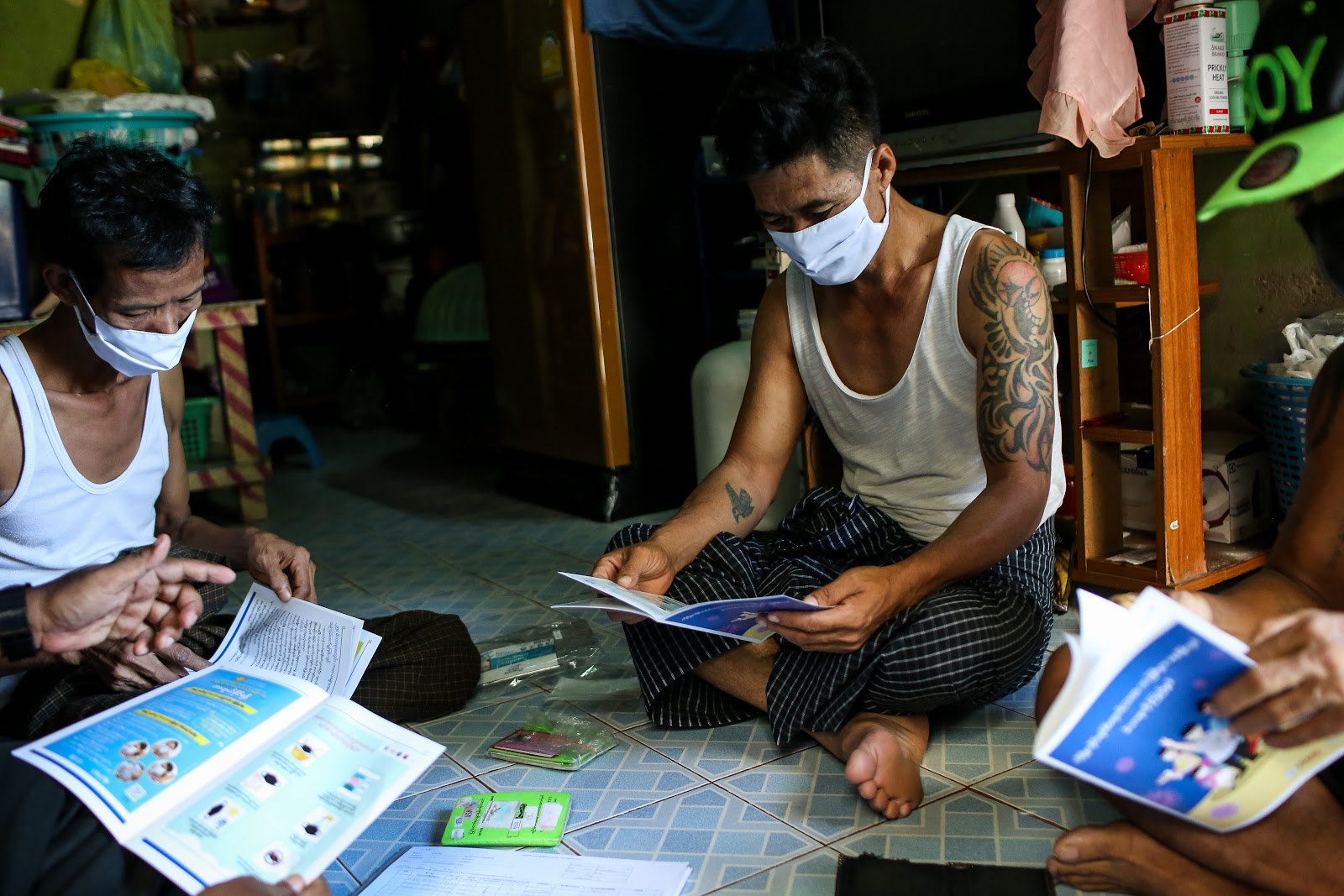

In Thailand, international aid organizations have targeted COVID-19 education towards vulnerable individuals with limited ability to socially distance, many of them migrant workers from Myanmar. 

Source: "IMG_9861" by USAID Asia is licensed under CC BY-NC 2.0


The pandemic is shifting the demographics of city users and dwellers worldwide, spurred by urban inequities that are not new, but are certainly garnering new attention. Social science scholars often frame these inequities within a question, first proposed by sociologist Henri Lefebvre in 1968: who has the “right to the city?” Our responses help to explain why urban (reverse) migrations are happening, and highlight which city amenities need to be made more accessible in an age of sickness, stress and uncertainty.


For example, patterns of Asian reverse migrations have implied that migrant workers typically work and live in cities temporarily, but are not necessarily welcome permanently. In American inner cities (at least in the more affordables ones), vulnerable essential workers may work and live, but may have less access to resources, like public parks, that are disproportionately located in wealthier neighborhoods. Likewise, homeless communities have limited rights to greenspace when their desired use— to stay overnight, for instance— does not align with the official intended use of the space. Importantly, many European cities have begun to address homelessness during the pandemic by offering temporary housing in hotels and shelters— a significant first step in synergizing social justice and urban planning.


This is just a small sampling of “rights to the city”-related issues exacerbated by COVID-19. Although a more complete analysis is beyond the scope of this piece, we must address who is living in cities and how they are living there before we can understand how greenspace is used in the age of COVID-19.

What does use of urban greenspace look like during the pandemic? 

Even, or perhaps especially, in the midst of a pandemic, the importance of greenspace for human health is becoming more apparent. Research has long observed the physical and psychological benefits of outdoor access, from improvements in respiratory function and physical fitness to stress reduction. The eminent biologist and conservationist E. O. Wilson was the first to coin the term “biophilia”: humanity’s innate tendency to desire interaction with nature. These benefits for humans provided by the environment are called ecosystem services and are essential to understanding the importance of urban biodiversity.


Advantages for human health become only more poignant as efforts to limit COVID-19 also limit mobility, planning and social gathering. Resultant stress and reduced exercise opportunities in urban populations have powerfully illuminated the value of greenspace for human health and wellbeing during the pandemic. Worldwide, rural parks and recreation areas have shut down as social distancing mandates continue and funding and staffing for parks sputter. The result is a perfect storm: suddenly, urban greenspaces have become vital sites for recreation and leisure. 
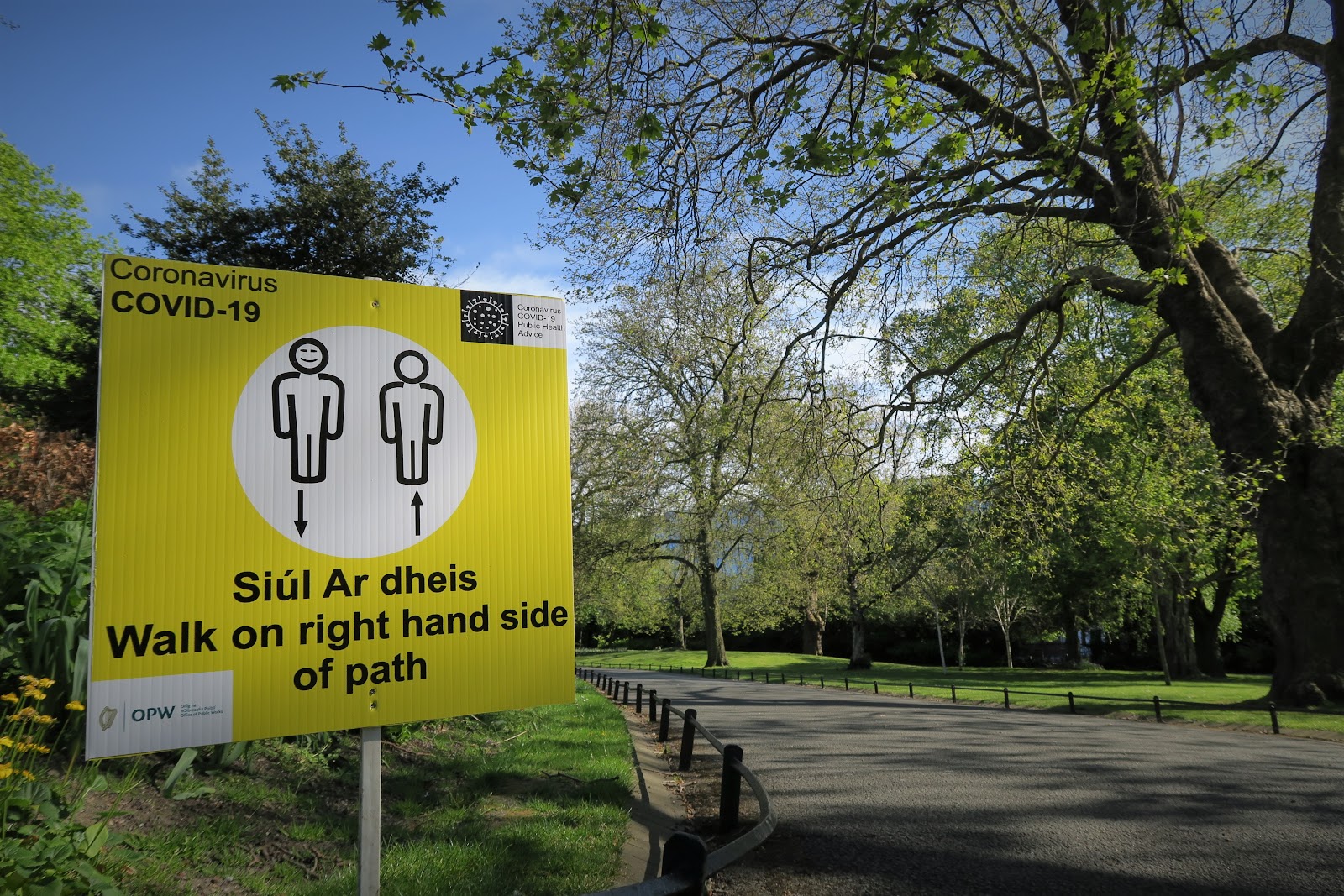

Signage in Dublin, Ireland urges greenspace users to socially distance as parks reopen. 

Source: "Take the right path in life" by through the lens of Cityswift is licensed under CC BY 2.0


While demand for greenspace has soared globally, accessibility to these spaces has fallen— due in large part to mobility restrictions placed upon urban centers by city officials. In Barcelona, for example, March and April saw the imposition of fines for those caught running and cycling in public areas. France’s lockdown lasted for months, severely limiting access to public space. These observations should not be misconstrued as a call to defy public health measures. Rather, this moment can be harnessed as an opportunity to improve how urban greenspace is used and managed.


Many cities are doing just that. Seattle, Washington has sped up its adoption of new pedestrian-first crosswalks that improve mobility for runners and cyclists. Other urban centers from Mexico City to Berlin are adding bike lanes and considering permanent through-traffic closures on city streets. Experts have already begun to debate whether these changes may be maintained long-term, and what the implications may be for developing greener, more efficient and less polluted cities. 


The pandemic has not only increased urban greenspace use but also diversified it. Outdoor learning modules have been implemented in rural Kashmir to much acclaim. The National COVID-19 Outdoor Learning Initiative in the United States follows in the same vein. Notably, these outdoor education models have had success in European cities— particularly in Germany’s “forest kindergartens”— for decades, where teachers harness the beneficial effects of biophilia in their approach to learning.


Children in Kashmir continue schooling in outdoor classrooms amidst social distancing guidelines to combat the spread of COVID-19. 

Source, with permission: Abid Bhat/BBC News 


Biophilic education has also caught on at home, where children and adults are using citizen science to stay entertained and globally engaged. Urban “bioblitzes”— community events organized to record biodiversity by an interested public— have moved to the backyard, where they can continue in a socially-distanced fashion. The online forum iNaturalist is a popular site for the events, which are occurring everywhere from New Hampshire to Kerala. Elsewhere, first-time gardeners are looking to the backyard for sustenance: to reduce their reliance on grocery stores, to develop a new hobby or even to reduce stress. As the pandemic upends lifestyles and livelihoods, reconnecting with nature offers urbanites a means to adapt. 

How has COVID-19 challenged urban biodiversity management?

The pandemic has caused local governments worldwide to go to new— and opposing— extremes when it comes to biodiversity management: some ecosystems are now more highly controlled than ever before, while attention to others has fallen to the wayside. 


Depleted budgets and lost workers have made urban greenspace maintenance an unaffordable or low priority expense for many cities. In Singapore, vegetation has been growing wild and untamed during its “circuit breaker” (lockdown) period, inviting new insects and delighting nature-enthused city residents. Elsewhere, cities under lockdown— notably lacking in traffic and snack-bestowing tourists— have witnessed ever-encroaching wildlife on the lookout for food. Coyotes and foxes in American cities, deer in Nara, Japan and those pesky Thai monkeys have all forced residents to reassess their relationships with local wildlife. 


In some cases, that means striking a balance: Lopburi locals have taken to feeding their monkey visitors, and some residents and business owners argue that humans should be the ones adapting to wildlife, not “the other way around.” Still, urban wildlife experts argue, the return of wildlife is likely to be cut short once cities begin emerging from their lockdowns. Rebounding traffic and reductions in social distancing can deter these curious animal newcomers— for example, some may be disturbed by increasing noise pollution while others who have found new sites for migration and breeding may be interrupted by reemerging humans.


At the other end of the spectrum, the public health crisis has, in some cases, resulted in more highly managed human-wildlife interactions. Local and national officials in China have imposed new regulations upon wildlife markets— largely cited as a possible reservoir of SARS-CoV-2— garnering praise from conservationists and public health authorities. Elsewhere, from Tehran to Tokyo to Venice, city workers are spraying antimicrobials in public areas to stop the spread of the virus, a measure that could have far-reaching implications for ecosystem health


In Lopburi, Thailand, monkeys have long been accustomed to being fed (here, photographed in 2012). Reductions in social mobility (and thus food handouts) during the pandemic have led animals to encroach further upon urban centers, sometimes causing excitement for residents as well as nuisances and public health concerns. 

Source: "Feeding Macaques" by Buzz Hoffman is licensed under CC BY-NC-SA 2.0


Some of the negative impacts of  returning wildlife in major cities have already begun to draw the attention of city officials. Lopburi has recently begun sterilizing its hungry monkeys to control their rapidly growing numbers and Singapore’s grassy sidewalks have become a point of contention between local nature-lovers and the National Parks Board, which is mandated to maintain roadside greenery. Of particular concern for the Southeast Asian city is a rising incidence of dengue, a disease spread by mosquitoes that use stagnant waters amongst dense vegetation to breed. 


Balancing biodiversity conservation, public health and human livelihoods is no easy task for municipal officials, especially in the midst of a health emergency. Yet, the pandemic has made it abundantly clear that these issues are not independent from one another. 


Many cities have already proven this point. In Pakistan, the COVID-19 crisis has caused high levels of unemployment in urban areas, spurring the expansion of the country’s 10 Billion Tree Program in order to make more tree-planting jobs available for those looking for work. Nairobi’s response to COVID-19 has involved expanding city parks for better social distancing and outdoor access, with city officials explicitly approaching public health management as a tool in climate resilience. In Amsterdam, planning for economic recovery post-pandemic has meant the adoption of policies that put human health and conservation first. And, even in the midst of its dengue and COVID-19 concerns, Singapore’s National Parks Board has acknowledged locals’ appreciation for more “naturalistic” vegetation and has proposed the expansion of its Nature Ways

Reflecting on Urban Environmental Management

The following four reflections build upon these stories of COVID-19 experiences, observing ways in which the pandemic can spur us to reimagine urban greenspace and urban areas more broadly. Importantly, responding to the pandemic has occurred across fields of expertise and benefited from collaboration among them. The following insights fall within such distinct fields— social justice, technology, microbiology and public health— and yet will be most useful if understood by urban residents and researchers alike, regardless of profession. A collective appreciation of the potential to restructure our urban systems with an eye to resilience must begin with an understanding of equity, leading to the first reflection:

Reflection #1: Accessibility is becoming a core value in urban greenspace planning

The pandemic has brought severe cuts to city budgets worldwide as unemployment rates jump and city revenue falls in the face of soaring public health expenditures. When push comes to financial shove, city park budgets are often the first to fall. Deciding which greenspaces remain open or maintained can be a highly political act as access is not equally distributed across the socioeconomic regions of most cities. 


“Right to the city” literature can be a valuable framework for defining best practices as cities manage budget cuts, in order to establish greater inclusivity in nature post-pandemic. Especially in light of the many beneficial ecosystem services that greenspaces may offer for public health, it is important to recognize that marginalized groups have been disproportionately impacted by COVID-19. That is, the people who have suffered the most from the pandemic are often also those with the most limited access to greenspace and ecosystem services. Therefore, recovery efforts must seek to redress these inequalities. 


Collaboration between the spheres of urban planning, parks management, and public health will be key to addressing these inequities and powerful conversations among stakeholders have already begun to gather momentum. For example, integrating social justice principles within spheres of architecture and urban design is helping to re-conceptualize the functionality of cities with respect to city user demographics. Simultaneous efforts to engage underrepresented groups— students of color, for instance— in urban ecosystem management are paving the way for more equitable greenspace use.

Reflection #2: Technology can be adapted as a resource for conservation

In response to the pandemic, cities, educators and families have applied technology in creative ways to strengthen biodiversity engagement and management. Citizen science ventures accessed via smartphone have opened doors for communities to learn more about their local ecosystems and contribute to biodiversity conservation in the process. In an effort to support social distancing, parks departments had developed online mapping tools to inform greenspace users of activity and crowd levels by area. 


Emerging technologies have also been co-opted to monitor and manage public health. Nairobi’s new air-quality sensors will provide valuable data about air pollution, a boon not only for managing environmental risks associated with COVID-19 but also for tracking ecosystem health. New York City’s Metropolitan Transportation Authority has opted not to use antimicrobial chemicals in some of its efforts to sanitize subways and buses, choosing UV light-emitting robots instead. Robots have also been employed in Singapore, where they’re programmed to roam public parks and encourage social distancing. 


Whether or not these technologies are explicitly intended to target the environment, many of them have the potential to link communities more strongly with nature and to aid in more efficient and less damaging ecosystem management. Yet, as the pandemic challenges cities to become “smarter” and “greener”, it will be more important than ever to remain mindful of Reflection #1 (accessibility) and to implement technology in ways that are equitable and globally productive. Asking where and how technology will be used— and inevitably, who will use it— can serve these goals.

Reflection #3: Broadening perceptions of ecosystem services to include the microbial world can benefit public health 

In recent decades, the emerging fields of microbial and disease ecology have shown us that greenspaces have the potential to affect human health in ways beyond traditional understandings of ecosystem services. That is, our appreciation of nature as a source of clean air and clean water and a site for physical exercise and mental rejuvenation is expanding to include ecosystem services that act at the microscopic level. Microbial ecosystems (i.e. “microbiomes”) have become more common in public vernacular; with respect to the human microbiome, for example, the benefits and detriments of probiotics and antibiotics are becoming well-known by the general public.


Growing widespread awareness of the human microbiome is an exciting first step in microbiology-based public health education. Yet, portraying the human microbiome as an independent entity limits the effectiveness of these efforts: challenging and broadening our understanding of the human microbiome to better address the greater microbial ecosystem should be a central aim of future microbial ecology research. Researchers, for example, have recently proposed re-imagining humans as “holobionts:” living, breathing microbial ecosystems whose members interact with other microorganisms in the greater environment.


This concept is especially useful for municipal public health dialogue, as it helps to inform how we frame urban ecosystem services. For example, reduced microbial biodiversity in the so-called “urban microbiome” has been documented and may have broad effects on human health. The hygiene hypothesis is a classic explanation of this proposed phenomenon, predicting challenges to immune system development in more developed, sterile environments. Recently, links between human health and human and ecosystem microbiota have been expanded to encompass even more disease outcomes, from transmission of diseases to humans from other animal species (zoonoses) to development of multiple sclerosis and inflammatory bowel disease


The COVID-19 crisis offers a unique opportunity to contribute to this growing body of evidence. Of particular significance are emerging studies that propose limited coronavirus transmission in outdoor settings and possible links between asymptomatic infections and previous exposure to other coronaviruses. As the pandemic modifies human-environment interactions across ecosystems— whether through the wide-spread spraying of antimicrobials or the growing presence of urban wildlife in many cities— it will be exciting to uncover how urban microbiomes have also changed. 


Applying microbial ecology to urban planning and ecosystem management is a second avenue along which we can refine our perception of the urban microbiome. Increasingly, the confluence of public health, urban planning and microbiology is trending towards a narrative of rewilding: re-introducing biodiversity at a macroscopic level to stabilize and diversify the urban microbiome, and thus improving public health and ecosystem health outcomes. This model of ecosystem reorganization is intended to make the urban social-ecological system self-sustaining, with minimal demand for ongoing managementThe Healthy Urban Microbiome Initiative and Microbiome-Inspired Green Infrastructure have emerged to extend these efforts into spheres of public education and urban management. 

Reflection #4: Recognizing synergies between public health, urban planning and greenspace use will be key to preventing future pandemics 

The reflections above have implications for targeting environmental management in distinct and yet highly connected ways. For example, greenspace accessibility, technology and public health methodologies may all affect ecosystem health and biodiversity. In turn, natural actors may influence various social components of a given social-ecological system. Antimicrobial resistance, for instance, is a result of a social practice— the growing use of antibiotics in medical and agricultural industries— that had an environmental consequence— the increasing prevalence of  antibiotic-resistant “superbugs.” What emerges is a highly interconnected social-ecological system from which indirect and unintended consequences can arise. No species— human or otherwise— or habitat type— urban or otherwise— can be independent of this system. 


This social-ecological system concept has been applied in public health policy with increasing frequency, perhaps most notably within the World Health Organization’s One Health model, an approach to public health policy that uses expertise from many sectors of ecosystem management, such as food safety and animal health, in its responses to disease. Addressing the COVID-19 crisis has demanded collaboration across these spheres of management and experts identify One Health as a keystone feature in planning to prevent future pandemics. 


Benefits of the One Health approach are not necessarily one-sided; what is good for humans can be good for ecosystems, too. Ecosystem management is an essential cornerstone of conservation and active public participation in greenspace management has been shown to strengthen biodiversity.


Actions informed by synergies between human and ecosystem health are already being undertaken— many of which have been mentioned here. Furthering this work in urban ecosystems in particular will be an important next step, and will benefit from approaches that also adapt expertise in urban planning, education and social justice. Notably, cities’ best practices for responding to COVID-19 include changes to waste management systems, food systems and ways of addressing housing and poverty— aspects of urban ecosystems that are also highly significant for this article, but beyond its scope. Many of these municipal responses utilize principles of a One Health approach, although none address the model in its entirety— likely because the model was largely crafted for public health management at the national level, and operates through national bureaus and agencies. Developing One Health schema for use at the local level is a promising strategy for grassroots global health efforts, especially as discussions concerning potential future pandemics proliferate.


What the COVID-19 pandemic has made most clear is that we live in a globalized world— our social-ecological systems are highly connected and highly complex. Of equal complexity are humanity’s responses to this crisis; they have yielded mixed results, but are not without innovation and compassion. The stories of loss and change-making told within this article reflect all of these themes, but are less universal truths than context-specific examples of urban management in the pandemic age. That is, there is no “right way” for all cities to overcome COVID-19. Rather than provide a list of best practices for current public health and urban environmental management (which would inevitably be lacking), this article acts as a conversation starter for a diverse and multidisciplinary dialogue. As we begin to imagine a post-pandemic world, we can learn collectively to reevaluate what matters in our urban centers: diversity, equity, resilience, and of course, a walk in the park. 


UBHub celebrates the adoption of the Kunming-Montreal GBF, highlighting local and urban impacts

Congratulations to the 196 Parties to the Convention on Biological Diversity for the adoption of the Kunming-Montreal Global Biodiversity Fr...